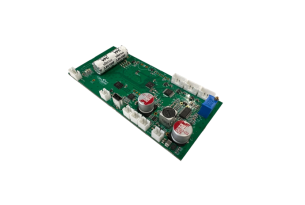
Sony AI camera IMX500 and LoRa
October 2024: Combining AI edge Image processing with LoRa communications
The integration of LPRS's eRIC-LoRa module with Sony's IMX500 intelligent vision sensor presents a powerful combination for creating advanced IoT and edge computing solutions. This pairing enables long-range, low-power communication capabilities alongside on-device AI processing, opening up new possibilities for smart devices across various industries.
eRIC-LoRa: Long-Range Communication
The eRIC-LoRa module is a versatile RF transceiver that utilizes Chirped Spread Spectrum (CSS) modulation and Digital Signal Processing (DSP) to achieve impressive long-range wireless communication. eRIC-LoRa is ideal for applications requiring long-range data transmission with minimal power usage, such as remote sensing and industrial control systems.
IMX500: Edge AI Processing
Sony's IMX500 is a groundbreaking intelligent vision sensor that combines an image sensor with a powerful Digital Signal Processor (DSP) and on-chip SRAM[2]. This unique architecture allows for:
- High-speed edge AI processing without relying on external servers
- Low latency inference for real-time applications
- Reduced bandwidth requirements and power consumption
- Enhanced privacy by processing data on-device
The IMX500 can deploy various types of neural networks, enabling applications like image classification, object detection, and semantic segmentation directly on the sensor.
Synergistic Integration
By combining the eRIC-LoRa module with the IMX500 sensor, developers can create intelligent IoT devices that process visual data locally and transmit only relevant information over long distances. This integration offers several advantages:
**Enhanced Edge Computing: The IMX500 can perform complex AI tasks on-device, while the eRIC-LoRa efficiently transmits processed results over long distances. This reduces the need for high-bandwidth connections and powerful edge processors.
**Privacy-Preserving Solutions: The IMX500's ability to output only processed metadata aligns well with the eRIC-LoRa's efficient data transmission. This combination allows for privacy-sensitive applications where raw image data never leaves the device.
**Low-Power Operation: Both components are designed for energy efficiency. The IMX500 eliminates the need for external processors, while the eRIC-LoRa's low power consumption makes it suitable for battery-powered devices.
**Flexible Deployment: The compact size of both the eRIC-LoRa module and IMX500-based devices allows for flexible installation in space-constrained environments.
Potential Applications
The eRIC-LoRa and IMX500 combination enables a wide range of innovative applications:
**Smart Agriculture: Devices can monitor crop health, detect pests, or track livestock using AI vision processing, then transmit insights over long distances to central management systems.
**Industrial Monitoring: Sensors can perform visual inspections of equipment or production lines, sending alerts or status updates via LoRa to control centres kilometers away.
**Smart Cities: Traffic monitoring, parking management, or public safety systems can leverage on-device AI processing and communicate data efficiently across urban areas.
**Remote Environmental Monitoring: Devices deployed in remote locations can analyze visual data for wildlife tracking, forest fire detection, or pollution monitoring, transmitting only relevant information to conserve power and bandwidth.
Conclusion
The integration of LPRS's eRIC-LoRa module with Sony's IMX500 intelligent vision sensor creates a powerful platform for developing advanced IoT solutions. By combining edge AI processing with long-range, low-power communication, this pairing addresses key challenges in deploying intelligent devices at scale. As industries continue to embrace IoT and edge computing, the eRIC-LoRa and IMX500 combination offers a versatile foundation for building innovative, efficient, and privacy-conscious applications across various sectors.
Related Pages
Ultrasonic Sensors
Ultrasonic distance measurement sensors
Pro-wave Ultrasonic Transducers
Pro-wave Ultrasonic Transducer Sensors